|
  *
RADIO INTERVIEWS * *
RADIO INTERVIEWS *
1340
WBIW - "Voice of the Hoosier
Hills," presents Miles Flynn and guest Dr. Dan Dusleag,
on:
TALK OF THE TOWN
- "Interviews about Interesting People
with Fascinating Topics," on December 29, 2004.
---MILES FLYNN: We welcome you to The Talk of the Town for Wednesday. I
am Miles Flynn, sitting in today. John Williams returns on Thursday, here
on 1340 WBIW. Joining us today on the program is local pediatrician—I want
to make sure I get your name right—Dr. Dan Dusleag?
---Dr. DAN DUSLEAG: That is correct.
---MILES FLYNN: All right. I wanted to make sure I did that right. Now,
we are going to be talking about all sorts of topics today. First of all,
you were born in Romania?
---Dr. DAN DUSLEAG: That is correct. First, thanks for having me here
today. I was born in 1966 on tax day, April 15th, which, of course, wasn’t
tax day over there. I came to the U.S. in 1990, November 25th; so it has
been about 14 years.
---MILES FLYNN: Now tell me. . . . when did you decide that you wanted
to get into the field of pediatrics, and what led you to Bedford, Indiana?
---Dr. DAN DUSLEAG: Well, first, I grew up in a family of doctors, which
means that I was exposed to that environment ever since I can remember. My
dad was an OB/GYN, my mom was a pediatrician and my grandfather was a
doctor as well. I wanted to be like dad—that was my first thought. Then, by
being exposed to the medical environment, I started liking it. Pediatrics
was something that I thought about later on, simply because I liked working
with kids. That was the main reason. . . . I have been in big cities all my
life, so Bedford was quite a change. But I wanted to be in a smaller
community after training in Chicago for years. That is how I came to this
area. Plus, I wanted to stay in a Midwestern town.
---MILES FLYNN: So, Bedford was hard to get used to at first?
---Dr. DAN DUSLEAG: It was a little different. . . . but I enjoyed a
more quiet place. I liked the space that we have here. The people have been
extremely friendly and welcoming. Overall, it has been a great experience,
and I have no plans of going anywhere in the future either.
---MILES FLYNN: Now, we mentioned your grandfather here a couple of
moments ago. He is going to be a fellow that we are going to talk about
quite a lot today because of a book that you are putting together regarding
his life back in Romania. So, that is what we are going to be dedicating a
lot of the show to today. Before we do get to that, though, I did want to
ask you a little more about your career in medicine. Did you. . . . you
said you did some work in Chicago before coming here?
---Dr. DAN DUSLEAG: Right.
---MILES FLYNN: Tell me how you got to be a doctor. Did you study a lot
back in Romania?
---Dr. DAN DUSLEAG: The system that we have in place in most parts of
Europe is six years of medical school. You apply straight from high school
and have admission tests for three days, and then, provided that you pass
them, you get in. Once I arrived to the U.S., I had to pretty much start
the whole process again, in terms of studying in English over a couple of
years, and taking the same exams as every American medical student does.
After that, I did some research in Cleveland, at Case Western Reserve
University for a year. That is when I decided to go into pediatrics. The
pediatrics training itself was done in Chicago, at the University of
Chicago and the University of Illinois.
---MILES FLYNN: Well, it sounds like you have been lots of places and
worked very hard to get to where you are today.
---Dr. DAN DUSLEAG: That probably applies to most of us, in a lot of
different businesses. But, it certainly has been a few tough years, at
first having to adjust to a new environment and a new country. . . . The
language, luckily, was never a major problem for me. Overall, I got to the
place where I think I want to be today, so I am very pleased. Bedford did
offer me a lot of chances, and I am fortunate for that.
---MILES FLYNN: Well, we are glad to have you here.
---Dr. DAN DUSLEAG: Thank you.
---MILES FLYNN: Now, going back to—you said—1966. . . .
---Dr. DAN DUSLEAG: That is correct.
---MILES FLYNN: . . . .in Romania. Tell me, where were you born and
where did you grow up there; and what was it like at that time?
---Dr. DAN DUSLEAG: Well, I was born in Bucharest, which is the largest
city in Romania—over 2 million people. My family is originally from Transylvania,
which is a very picturesque land in the northwestern part of the country,
with lots of mountains and beautiful nature. 1966, if I remember correctly,
was the year after Ceausescu came to power, of whom I am sure you know
about. So, in that regard, it was probably not the luckiest of years. It
was 20 years into Communism in Romania, which, prior to 1945, had a stable
monarchy and was a democratic society. As a child, of course, I was
shielded from all of that by my parents. I did not realize much until I
grew up to a certain age and things became more clear; I saw that
everything around was quite unusual—more or less a big lie. As you grow up
in that kind of environment, you will ask yourself questions; and that is
when I started to learn more about our history and the problems that we
were facing.
---MILES FLYNN: So, growing up in Romania at that time period, you said
before, at the end of World War II, you had the monarchy.
---Dr. DAN DUSLEAG: Correct.
---MILES FLYNN: Then after World War II, Europe was, Eastern Europe in
particular, sort of carved up and you had these so-called satellite
countries to the Soviet Union—later called Warsaw Pact countries—Romania
being one of those—what was that like? I mean, you probably, as a
child—like you said, you were shielded from a lot of that; but what was
that like for people living there at that time?
---Dr. DAN DUSLEAG: Yes, you made a very correct observation. Few people
know that, in most of those countries, there was no political tradition in
terms of Communism. It was something that was foreign, brought upon us by
our neighbor and “friend” up North—Russia. Toward the end of the war, as
the Russian Army advanced and got all the way to Berlin, on the way back,
it occupied most of what is Eastern Europe today. As the western world was
trying to doctor its own war wounds, there was no intervention on our
behalf; so we were left in the sphere of influence of the Soviets. The
Communist regime itself was introduced by tanks, and then by fraudulent
elections, intimidation, and so forth. Within a short period of time,
anybody who had something against the system was silenced through a variety
of means. So, by the time I was born, there was a police state in place
without much dissent, which was virtually impossible. To give you an
example—there were lots of specific examples by which you would know that
it was not a normal society: The fact that you could not talk to your
neighbors—not to mention a radio station—about what you experienced every
day, for instance. Or, the fact that you would see security police lined up
every so many meters on the main square; if you would raise your hand and
say something against the regime, then you would probably disappear within
five minutes. . . .
---MILES FLYNN: And then I guess the more sinister forces would be the
ones that you didn’t see, and you didn’t know if those neighbors might be
ready to squeal on you if you did say something.
---Dr. DAN DUSLEAG: That’s a very great observation as well, because I
have asked myself many times nowadays, how society can be transformed into
such a mechanism of oppression and informants. It is a slow process. First,
you decapitate the head of society by putting in jail or eliminating people
who are openly against the system. Then, you have the mass of the
population who tries to survive and go with the flow. Eventually, a few
will take advantage of the whole situation by providing information about
neighbors and so forth, and that is what happened. The number of informants
that you would have in a society like this is very difficult to estimate
because everybody kept a secret more or less about it. It did get to the
point when I was a teenager, when I couldn’t talk to anybody besides my
immediate family or friends that I would trust about political issues, or
any sensitive issues for that matter. In the 50s, it was even worse. If you
would listen to, say, foreign radio stations, and they would have
anti-Communist propaganda, then you would face jail time.
---MILES FLYNN: When did Communism fall in Romania?
---Dr. DAN DUSLEAG: Well, it reached a peak of extreme problems in the
late 80s. After the Russian changes in 1989 is when the Romanian
“Revolution” took place. It was actually a coup d’état, but was also the
product of people going on the streets and demonstrating. I was there in
1989 on the streets of Bucharest with my fellow student friends. So, that
was the year. It took quite some hiccups after that until things truly
became democratic like they are today.
---MILES FLYNN: Now, tell me about that time. You said that your leader
had been in power beginning in 1966?
---Dr. DAN DUSLEAG: I think it was around 1965—correct.
---MILES FLYNN: And then he remained in power until the bitter end?
---Dr. DAN DUSLEAG: Pretty much. And he became more powerful toward the
end. The main problems that we experienced were economical. We were a
relatively wealthy country, at least by local standards; we used to have a
lot of oil and grains, but we did accumulate some debt. Ceausescu’s plan
was to repay it back by the end of the 80s, which he did. The result was
impoverishing the country by exporting all the goods. So, by the end of the
80s, it was quite an anomaly in terms of having a country which was
producing a lot but living on the brinks of poverty.
---MILES FLYNN: Now, I know that we saw other countries’ attempts to
sort of free themselves at different points—Hungary in 1956. . . .
---Dr. DAN DUSLEAG: That is correct.
---MILES FLYNN: Were there any sort of failed efforts in Romania?
---Dr. DAN DUSLEAG: Right. There were quite a few actually; and, as I
mentioned earlier, there was a percentage of the population who did try to
oppose the system from the very beginning. There were several ways of doing
that: There was armed resistance in the mountains, mainly by students,
former army officials, and a variety of other people from different levels
of society. Then there was the more subtle type of opposition, which meant
anything from talking about it to supporting the partisans, which is what my
grandfather did. But, over a number of years, by systematically hunting
those people down, by 1964 there was virtually no dissent. That is when
amnesty was declared, and all of the political prisoners who survived were
released; and, by most accounts, there were half a million people
imprisoned out of the 16 million in 1945, so that is 1 in 36. . . . It took
a while for the system to be set in place. There was resistance. But,
unfortunately, when you have a powerful neighbor like the Soviet Union and
its army’s presence for a number of years, it becomes impossible to
succeed.
---MILES FLYNN: Well, we are talking with Dr. Dan Dusleag this morning,
local pediatrician. When we return, we are going to get into his latest
labor of love, I guess you could call it, the book he is doing on his
grandfather and his experiences in Romania. So, stay tuned. We will be back
in just a few moments here on 1340 WBIW.
* INTERMISSION *
---MILES FLYNN: Time now for more of Talk of the Town on 1340 WBIW, and
our guest today is Dr. Dan Dusleag. Doctor, we left off talking about the
oppression present there in Romania during the time that you were growing
up. Now, what I want to talk about now—you mentioned your grandfather a
little earlier in the program—one doctor in a line of doctors in the
family; and we want to talk about his experiences in Romania. You are, in
fact, writing a book on that very subject, correct?
---Dr. DAN DUSLEAG: Yes. It is based on his memories that he wrote in
the 70’s. The story goes back to 1951, when he was among a group of
intellectuals who tried to openly oppose what was going on. Initially, by
refusing to join the party—the Communist party—which was mandatory if you
were to survive professionally, then, by helping a group of youngsters who
were taking arms and were fighting in the mountains. He was made an example
of when he was caught in the process, and went to jail for seven years. He
barely survived, his estate was nationalized and his family was kicked out
of the house and exiled. So, there was a lot of suffering for a lot of my
relatives. I didn’t know much about it until I was probably about 14, when
he felt that I was old enough to understand and wise enough to keep all of
this information in secrecy. That is when, on the prompting of my father,
he started writing his memories down even though, when he was released, he
had to sign a consent, a statement, saying that, if he were to disclose any
of the things he experienced, he would go back to jail. And a lot of people
did end up back; so, it took some courage on his part to write his
experience down. I made a promise back then than I would, at some point,
make this information available to other people. Of course, I didn’t know
in 1987 when I inherited his notebooks that the revolution would take place
in a couple of years. . . . It took about 17 years to get to the point of
putting them together, translating them, and adding some historical
framework to bring them into a form that can be published, which is where I
am at today.
---MILES FLYNN: Hm! Now, how much volume of material are we talking
about here—his notebooks?
---Dr. DAN DUSLEAG: In terms of size or number of pages?
---MILES FLYNN: Yeah, just number of pages—how many notebooks are we
talking about?
---Dr. DAN DUSLEAG: He wrote in five little scrapbooks that were
carefully hidden in a wooden box under a window, in the village where he
was born; they were very difficult to get to. He wrote all of the
information between 1979 and 1986. . . . The book will be about 280 pages
long, with 36 pages of photographs and documents that I find very
pertinent—including the only note that he wrote from prison in seven
years—virtually all from family archives. On top of that, there is a
historic introduction that I wrote with the help of several historians—to
make sure that it is accurate—in order to introduce the reader to the
general atmosphere in post World War II Eastern Europe. That was needed,
because it is difficult to get into the story without having an idea of
what actually happened before—how it is possible for someone to pick you up
from your house in the middle of the night and make you disappear for a
number of years, without your family knowing your whereabouts. . . . This
is something that is very difficult to comprehend in a society like ours,
where personal freedom is cherished so much.
---MILES FLYNN: So when this happened, they just came in the middle of
the night and took him away? Did the family get any explanation ….any word?
---Dr. DAN DUSLEAG: No, the tactics were the same as in the Soviet model
of Communist purge that took place in the 50s. They would observe somebody,
get the information that they wanted and stage up a fake, show trial. The
initial part was to pick you up at a place where you could be picked up
easily—which was home—usually in the middle of the night, knocking on the
window, getting you out. Then, you would be gone. . . . Within a few
months, your family would be exiled, evacuated from the house. Of course, a
lot of your relatives would suffer some sort of repercussions as well. . .
. As far as information about my grandfather goes, there was none. Nobody
knew where he was, whether he was alive or not. There was one note written
in 1952, I believe, dictated by the prison officials, in which he requested
clothing from home, because the government was not able to supply these
items any more, given the many incarcerated people.
---MILES FLYNN: That was the only thing that you ever heard then, your
family?
---Dr. DAN DUSLEAG: . . . .that my family ever heard about him, yes.
---MILES FLYNN: Now, you said that there was a show trial. Was he made
to confess to various crimes?
---Dr. DAN DUSLEAG: Absolutely. The scenario was very much identical for
a lot of people in his position. There would be some fake accusations, a
statement you would have to sign, something that would incriminate you.
This would usually happen after months of imprisonment without any kind of
advocate or help. Eventually, most people would fail psychologically or
physically, if they even survived. The fake trial would be literally a
show, and you would be sentenced to a disproportionately long incarceration
time. Then your family would be persecuted, your friends as well—anybody who
might have collaborated with you. His was one of the many examples,
probably half a million examples; there were many other similar situations.
That is the reason why, toward the end of the 60s, there was nobody left to
protest.
---MILES FLYNN: Hm! Now, what were the…..what were the conditions like
for your grandfather during that time?
---Dr. DAN DUSLEAG: The book describes what he wrote down—incidents
experienced in prison. There was a former general from Romania, his name is
Ion Eremia, who summarized the four torments of Communism imprisonment
very, very well. If I remember correctly, there was a particular order that
he chose for them, and it was the following: hunger. . . . cold. . . .
immobility. . . . and solitude. I talked to several, former and
still-surviving political detainees in Romania when I went there in
September of 2004, and they all went back to the same issues. When I asked
one of the ladies, Mrs. Lena Constante, who spent eight years out of twelve
in solitary confinement, “Did you ever cry in prison?” she thought about it
for a few seconds, and then she replied, “I did. . . . I cried of hunger.”
That was the main way to bring the prisoners down. All you got to eat every
day was a little piece of corn-based, usually moldy polenta-type food and
some water. So, vitamin C deficiency was rampant because you never got a
fruit or a vegetable. You eventually developed scurvy, which is a vitamin C
deficiency disease unseen in this country. A good percentage of people
probably did not make it out alive.
---MILES FLYNN: Now, was this often, I would imagine, enough to make
anyone sign any piece of paper? Were there other instances where….were they
ever trying to get actual information or names out of a person, or just
simply enough for them to get that signed confession?
---Dr. DAN DUSLEAG: Well, they would always like to, of course, get
anyone implicated who was related to that person; but, in my grandfather’s
case, there was nothing to get. He never broke down psychologically or
physically, but he had to sign a consent, because he was concerned about
the safety of his family. He was told on numerous occasions, “If you don’t
do this, then everybody else will suffer.” They did suffer anyway, but at
least they were not in prison, so that is the reason why he eventually
consented to accuse himself of things that he never did.
---MILES FLYNN: Can you give me any examples…..you said that your family
lost the home. Is that right?
---Dr. DAN DUSLEAG: Correct.
---MILES FLYNN: Were there any other repercussions there?
---Dr. DAN DUSLEAG: Yes, I can give you specific examples. The home was
eventually demolished; it was first nationalized, and then demolished. The
family was forced to leave the city, was told not to be around a certain
area; it had to move in a smaller village, further away. My mother, who was
in medical school at the time and first in her class, was not allowed to
finish first because she had a poor “social grade”; her social background
was not appropriate. Her brother, who was an engineer, was not allowed to
sit for his board exams; he had to work as a factory worker for a number of
years despite being a college graduate. My grandmother was sick, and she
could not get adequate medical attention due to a lack of money. . . .
There were many incidents like that causing distress over the years.
---MILES FLYNN: I would suspect that this would happen when you are
having people in prison for such a long time …..were there a lot of deaths
as a result of this?
---Dr. DAN DUSLEAG: Yes. Unfortunately, there is no clear statistic.
Even nowadays, nobody knows exactly the number of people who were in
prison. For two reasons: one, there probably were no records; second, if
there were records, they were destroyed at the end of the 80s. According to
current estimates, in a country of 16 million people back in 1945, there
were, as I mention earlier, half a million people imprisoned in the 50s
which means one in 36. Of those, a good percentage did not make it out
alive; and out of the ones that survived, very few had the courage to write
about their ordeal. Even less were able to publish it. That is why, in a
way, I feel very privileged to bring this story to the public. When I was
doing research, looking for information in English regarding the abuse that
occurred in those years, I was surprised not to find a lot published books.
Upon reflection, I realized that this is maybe because we are a
Northwestern European society, or at least the descendants of Northwestern
Europeans, which means that there is not a lot of interest in Eastern
European issues. The other reason is that it has been a long time,
precisely 40 years—between the 50s and the 90s, when Communism fell—during
which time not a lot of information surfaced. . . . I did some research in
Romania, and I came across a list of about one thousand individuals from
the same area as my grandfather, who were imprisoned or died at the hands
of the Communists, which was provided to me by History Professor Ioan
Ciupea. That is going to be part of the book as well, so that it will, I
hope, represent all those individuals who never had a voice or a chance to
tell heir stories.
---MILES FLYNN: Now, one more question I have regarding this prison
system…..in Russia or the Soviet Union, we also think of forced labor. Did
you have that in Romania as well?
---Dr. DAN DUSLEAG: Yes, unfortunately, when the Russians introduced
their Communist system, that included the Soviet-type Gulags as well. A lot
of political convicts were forced into labor. Some of them—especially intellectuals,
educated people, who were considered to be potentially more dangerous
because they were “thinkers”—were kept in isolation, only in certain
prisons, like my grandfather was. They had to do some local physical labor
in a factory inside of the prison compound, but were never allowed to
leave. He was in such a factory until he was too sick to work and he
developed scurvy.
---MILES FLYNN: Well, we are going to take a quick break. I want to come
back and talk more with Dr. Dan Dusleag here on 1340 WBIW, so stay tuned.
We will be back here in just a few moments.
* INTERMISSION *
---MILES FLYNN: Welcome back to The Talk of the Town on 1340 WBIW. We
are talking with Dr. Dan Dusleag, a local pediatrician, here, in Bedford.
We are talking about growing up in Romania—what it was like. Also, what it
was like for his family—and specifically for his grandfather. This is what
the doctor is putting together in a book, his grandfather’s memoirs. You
said he had to keep these hidden?
---Dr. DAN DUSLEAG: Oh, absolutely. He found a place in the village
where he was born, in Transylvania, in a wooden box. He also put them in
his prison clothing that he came home with. None of us knew about it—at
least I did not; my father probably did. He wrote a note requesting that,
after his passing, somebody should get his memoirs out and read them; and
that would have been us, the grandchildren.
---MILES LFYNN: So, you say he brought some home in his prison clothes?
He was actually doing this in prison?
---Dr. DAN DUSLEAG: No, after he was released, he took the prison
clothes that he wore for about seven years—which were in terrible
shape—home with him. Later, he hid the notebooks in the prison clothing
inside of a box, by a window, in a remote location, virtually impossible to
be found.
---MILES FLYNN: What would have happened had they been found?
---Dr. DAN DUSLEAG: He likely would have gotten at least the same amount
of jail time or more; there were specific examples that he gave of people
he had met in jail who did just that. They were released, they talked about
it, and they were re-imprisoned; a lot of them did not make it the second
time around. So, he took quite some risks when he wrote his memoir. That is
one of the reasons why I chose to do this project; I felt it was my
responsibility to unearth the truth, to make it available. Somebody
mentioned once—I think it was French philosopher Simone Weil, that, “The
destruction of the past is perhaps the greatest of all crimes.” So, if
something terrible has occurred, but we fail to talk about it, then it
never did occur. Undocumented events will become nonexistent. I hope this
book will add to the body of evidence against all the crimes of that
period, which some people are trying to deny, because they may be in a
position to suffer some consequences right now, if they do not.
---MILES FLYNN: So, your grandfather first let you know about all of
this when you were 14? That is what you had said.
---Dr. DAN DUSLEAG: Correct.
---MILES FLYNN: At what point in your life did you decide this book was
something that you wanted to take on?
---Dr. DAN DUSLEAG: Back then, when I was a teenager, I was very
surprised about his ordeal. I was very upset about the whole story; and I
made a promise that one day, when the conditions would be proper, I will
bring it in a form that would be available to other people. I did not know
how and when; and, of course, it took me a number of years to take care of
my life here, adjusting to the transition from one continent to the other
before I was in a position to spend the time, and have the financial
resources to start this process. So, it is longer than I thought it would
take me; but eventually it did happen and within the next 4-6 months, it
will be published. That is the plan.
---MILES FLYNN: Now, you traveled back to Romania in order to conduct
research? When did you do that? Was it once or was it more than one
occasion, and how much work did you do while over there?
---Dr. DAN DUSLEAG: I have been back to Romania since I left only three
times—once in 1995, once in 2000, and once in 2004, in September. For the
purpose of researching information about the book, or strictly for the
book, I spent about ten days in September. I went on a prison tour; I tried
to visit the places that he had been in. He was in four different jails;
one of them, which is still an active prison, I could not enter. I explored
the basement of a prison abandoned in the 70s. I took photographs; those
are in the book. I talked to several historians and I talked to some survivors.
So, I gathered as much information as I could, data that I thought was
pertinent to the story. However, the main reason I went back was to see the
prisons, which you can nowadays, and to step in the place that he has been,
trying to get an idea of how it felt to be there.
---MILES FLYNN: Now, along the way, did you have any help or input from
other people?
---Dr. DAN DUSLEAG: Yes, I have an acknowledgement which includes about 50
names. The main help was that from a Romanian history professor, who is a
member of the Romanian Academy, Professor Florin Constantiniu, who reviewed
the entire manuscript and made some corrections on my historical additions,
which were at times slightly inaccurate. I have also talked to a former
Romanian presidential advisor, Professor Floricel Marinescu, and I did work
quite a bit with another gentleman from the National Museum of
Transylvanian History, Professor Ioan Ciupea. He is the one who provided me
with the list of one thousand names of political detainees, people from the
same area as my grandfather, list which will be published at the end of the
book. I have also received input from two individuals who have been editing
and proofreading the manuscript, and help from an artist from New York, Mr.
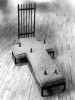
Mel Chin. I designed the back cover of the book based on the photographic
artwork that he created for Amnesty International in 1982. It is a very
interesting picture of a cross and a prison bed at the same time, intended
to raise awareness, back in the 80s, to the plight of political prisoners
throughout the world. I am very indebted to the fact that he has allowed me
to use his art for the back cover, because I think it speaks, more than
words, in terms of what those people had to go through.
---MILES FLYNN: Now, in dealing with these people, did you find that,
once you told them what you were doing, they were very eager to help and
thought that it was a good thing?
---Dr. DAN DUSLEAG: That is a very good point. When I went back to
Romania in September 2004, I was surprised by several things. I didn’t find
the same country that I left 15 years ago. A lot of the young people had
virtually no information about what had happened during Communism. If you
were, let’s say, eight years old back then, and now you are in your early
20’s, you literally have no recollection of those years. Then there is a
subpopulation of people who are still in power, probably former Communists,
who are wealthy businessmen and who have a direct interest in keeping all
this information out of the public view. Then, you have a percentage of
individuals, including historians or people who have suffered in one way or
the other, who are very active in bringing all of this information up. In
northern Romania, there is even a museum similar to the Holocaust Museum
called The Memorial of the Victims of Communism. There are a variety of
publications that deal specifically with this subject, so I did find a lot
of help from those individuals, yes.
---MILES FLYNN: So there is still a small camp there that is trying to
keep all of this under wraps?
---Dr. DAN DUSLEAG: That is correct. That is happening even though we
are marching very clearly toward democracy and market economy, even though
we are part of NATO, we are going to be in the European union by 2007 and
Romanian society is going on a normal path. Many individuals who are in a
very powerful position still take advantage of those years in terms of the
things they stole and have accumulated. So, your assertion is true.
However, every piece of evidence that is added will challenge the amnesia
and denial of those individuals. That is what I am trying to do.
---MILES FLYNN: So, your ordinary, everyday Romanian nowadays, someone
who, oh, say is a teenager—are they even aware of some of the things that
happened?
---Dr. DAN DUSLEAG: I have gotten a lot of different comments from
Romanians. The most common reaction I got from youngsters is that Communism
was just a bleep on time’s radar screen, so years from now, it will be
barely mentioned in history books. Some of the elderly said, “We just want
to forget; it has been a bad period that occupied most of our lives; we
just want to go on.” On the other hand, as we all know, history has a
tendency to repeat itself unless you point things out. I would like to
quote somebody that I think summed it up very, very well, and that is Neil
Wood, a political theorist, who said, “The enlightening experience of
studying history changes us and our views, and has a direct bearing upon
the way we fashion our future.” So, I tried to explain to those people
that, if you don’t bring this up—if you don’t discuss it, it may happen
again; and there are a lot of examples in history in which the same problem
occurred and recurred. So, political awareness is, I think, very, very
important; ignorance, as we all well know, is at the base of a lot of evil
in this world. So, the more you know, the more informed you are, the less
likely you are to experience something like this.
---MILES FLYNN: Has that been your greatest goal in this work then?
---Dr. DAN DUSLEAG: Absolutely. That is the main and probably only goal:
to inform, to make people think and hopefully to have a tiniest
contribution to the bigger picture of avoiding this from happening again.
---MILES FLYNN: So, give me some idea of, once you really got into this,
you said after you got established here and had the means and the ability
to get out and start really getting into this work, once you got to that
point, how long has it taken you to get to where we are today?
---Dr. DAN DUSLEAG: The process started in 2000 with looking at the
manuscript and trying to arrange it, trying to decipher it at times; my
mother helped me with that. For the last couple of years, from December of
2002 until today, I worked on this project almost every single day—from the
translating process to arranging the stories chronologically to getting all
the additional information; so it has been, quite honestly, a lot more work
than I ever thought that I would have to put into it.
---MILES FLYNN: Then you said you are looking at 4-6 months before. . .
. ?
---Dr. DAN DUSLEAG: Yes. I have several publishers in Romania who are
very interested in getting the book published in Romanian, so it is going
to have to be retranslated back in to Romanian, which is what I am working
on as well. I have some interests from a couple of American university
presses, and there are a few smaller publishers, of which one will probably
get it done in a very short time frame.
---MILES FLYNN: I would think a book like this might show up as required
reading in a college course down the road, perhaps?
---Dr. DAN DUSLEAG: Sure. There is a…..if you do a search on, let’s say,
Amamzon.com and you type in “Communist prisons,” you will be surprised at
how little information you will get back. So, with that in mind, I will
certainly be flattered if anybody thinks that way and will be interested in
reading this book as part of a course. Teaching our youngsters about the
history of Communism—even in this country, which has no relationship with
Communism, except for the Cold War—will be very beneficial for the future
generations.
---MILES FLYNN: So, how does it make you feel now, that you are so close
to getting this entirely completed, getting the word out? Is it a great
sense of fulfillment for you?
---Dr. DAN DUSLEAG: It is. It will be even more when I see it completely
done, of course; but it has also been taking a lot of time away from other
activities and even from time with my four year-old son. So, I am glad that
it is going to be over soon because it has been very time-consuming. Plus,
in 2004, we, as a family, celebrated 100 years from my grandfather’s
birthday; so, this project had a good timing in that sense.
---MILES FLYNN: Now, along the way, did you also hit some roadblocks?
Were there some discouraging moments?
---Dr. DAN DUSLEAG: I am a very optimistic and determined person; if I
put my mind to something that is reasonably possible to do, I usually go
through with it. No, I have not had any major problems. It was just
difficult to obtain certain information, and difficult to get the right
editor. I have a lot more respect for anybody who puts something in writing
than I ever had before, because I realize what amount of work it takes. I
was maybe a little bit unrealistic when I started, in terms of what would
be involved in this endeavor, but, would I do it again? Absolutely! I would
start again today, if I had to, from the scratch!
---MILES FLYNN: How did you find an interested publisher? How did you go
about that process?
---Dr. DAN DUSLEAG: Publishing something like this, which is, like you
mentioned earlier, interesting for scholars, maybe for historians, maybe
for Eastern Europeans, is not simple. This is not going to be, obviously, a
book of general interest, one for the average American citizen, so it is
difficult to find a large publisher. There are some smaller companies,
including one partially owned by Barnes & Noble which, with minimal
risks, will promote unknown authors and more unusual subjects like mine. It
is not an easy process, but the goal in my case is not to be a famous
author. The author is my grandfather. I am a just a contributor. The goal,
again, is to educate. With that in mind, as long as a book will be
available in print and you can find it on the internet, then you can read
about it if you are interested. That makes me happy. That is the plan.
---MILES FLYNN: Okay, I see. Do you think that you have another book in
you down the road or is this the. . . . ?
---Dr. DAN DUSLEAG: Probably not, unless I have something to say that I
feel very strongly about. I don’t plan to make a second career out of this,
of course not; but you never know. I enjoy reading, I enjoy writing, and I
enjoy researching; but I also have a busy practice and job, a career, and a
family too; so, I don’t know how this will mix up in the future. Time will
tell.
---MILES FLYNN: So, if someone wants to look this up and wants to locate
this book when it is on the shelves, tell me what it is called and tell me
how I could find it?
---Dr. DAN DUSLEAG: The title of the book is "My Second
University," and the subtitle will be "Memories From Romanian
Communist Prisons." My grandfather’s name is Stanciu Stroia, a
“complicated” name, like many Romanian names. It will likely be available
through small local bookstores, including the ones in downtown Bloomington,
and through the BRMC Gift Shop, for instance; also on-line, on the major
on-line vendors like Barnes & Noble, Amazon, and Borders. Much less
likely will one be able to find it on the bookshelves of a major chain
bookstore because, again, the limited levels of interest generated by a
topic like this. However, the internet will be the best choice.
---MILES FLYNN: I was going to ask you—the internet—do you think this
will open a lot of doors then?
---Dr. DAN DUSLEAG: I believe so. There is a foundation in Boston called
The Aspera Educational Foundation, which deals with publications of this
sort. I have already discussed it with the founder to have the book listed
on the foundation’s website. . . . So, if somebody does search the topic of
Communist prisons, they will run across it. There are a lot of different
ways, and some very time-consuming ways of marketing a product like this. I
am planning—and we will see how that goes—to have a small book opening at
Barnes & Noble in Bloomington. I talked to them; but, it is, of course,
not an easy task. If you are a local author, they occasionally will help
you. . . . So, the more people I reach in terms of them reading the book
and getting exposed to its content, the happier I will be—not so much for
me, but for the memory of all of those people who never had a voice, whom I
am trying to represent.
---MILES FLYNN: So, again, the title is "My
Second University: Memories from Romanian Communist Prisons"
and it should be out in 4-6 months; Is that what we are shooting for?
---Dr. DAN DUSLEAG: That is correct.
---MILES FLYNN: And you said the internet sounds like the easiest way to
locate it then?
---Dr. DAN DUSLEAG: Correct, and the local bookstores in Bloomington and
BRMC as well.
---MILES FLYNN: Okay. Well, do you have anything you would like to say
in closing? We are just about out of time for today.
---Dr. DAN DUSLEAG: I appreciate you having me here today and listening
to the story, and I hope it will open the minds and broaden the horizons of
people who will read it. As I mentioned earlier, the more you know, the
more you will avoid a similar problem from occurring in the future. Thanks
for having me here today.
---MILES FLYNN: Well, thank you for being here. Now that you have almost
reached the conclusion of this work, what are you looking forward to
most—spending more time with your family?
---Dr. DAN DUSLEAG: Yes. Going back to more wrestling time with my son
in the evenings, rather than sitting in front of the computer, and reading
more medicine from this point on. . . .
---MILES FLYNN: Okay. Well, Dr. Dusleag, thanks for coming in and
sharing this with us today. It sounds like hard work—great work though, and
I hope that some of our listeners out there found this to be very
interesting and will locate that book a little later on.
---Dr. DAN DUSLEAG: Thank you very much again.
---MILES FLYNN: Okay. You take care.
The above has been an edited transcript of the live radio show
"The Talk of the Town," on WBIW, with Miles Flynn and guest Dr.
Dan Dusleag, aired on December 29, 2004.


My Second University
- Click here to reserve your copy!
|